
Keep them cold, keep them closed
Store flat, cupped side down, between 2 and 8 °C, covered with a damp cloth. Never in fresh water and never sealed in plastic. They are alive and they need to breathe.
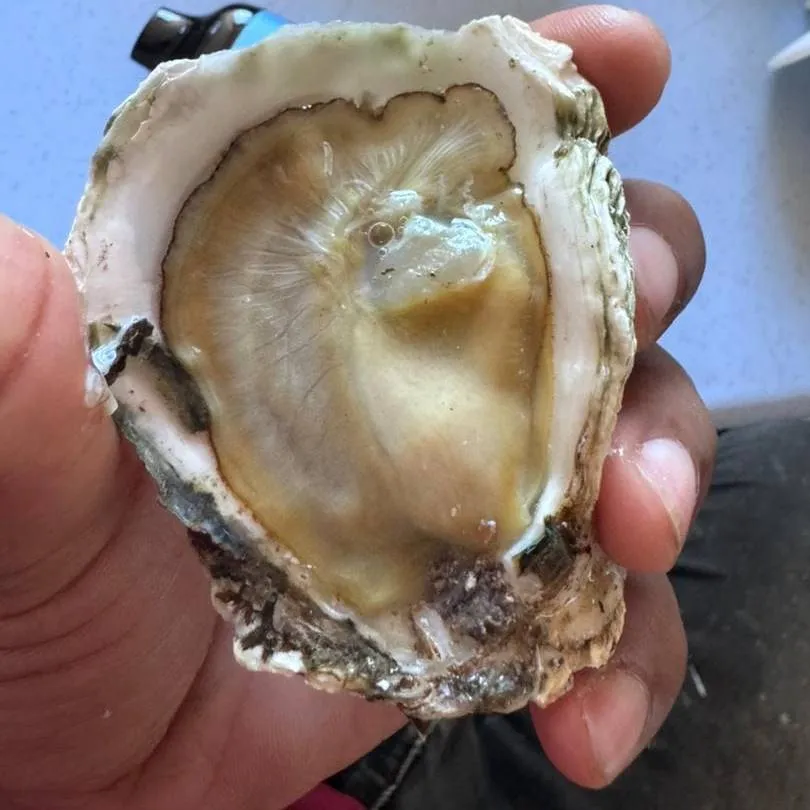
The oysters
Both of Malaysia's commercially important native oysters are grown for us. They are not interchangeable, and we would not want them to be.
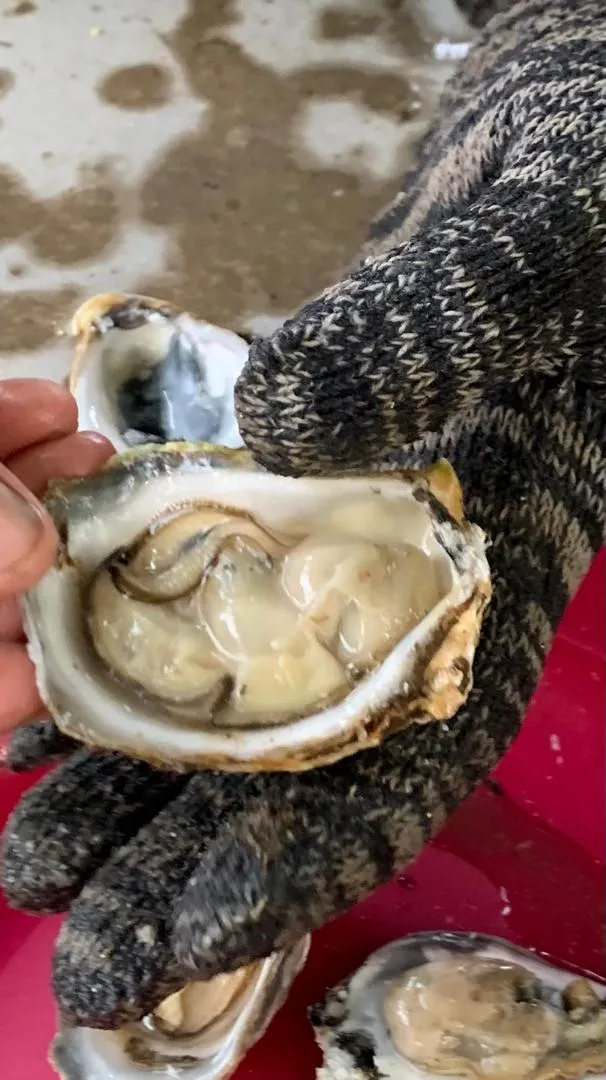
Crassostrea iredalei
The small one, and the one we are asked for most. Grown on our contract sites in the sheltered bays of Sabah, it comes out deep-cupped and firm with a clean mineral finish and no heaviness at all. Restrained rather than shy. There is plenty there; it simply does not shout. This is the oyster to hand to someone who is convinced they don't like oysters.
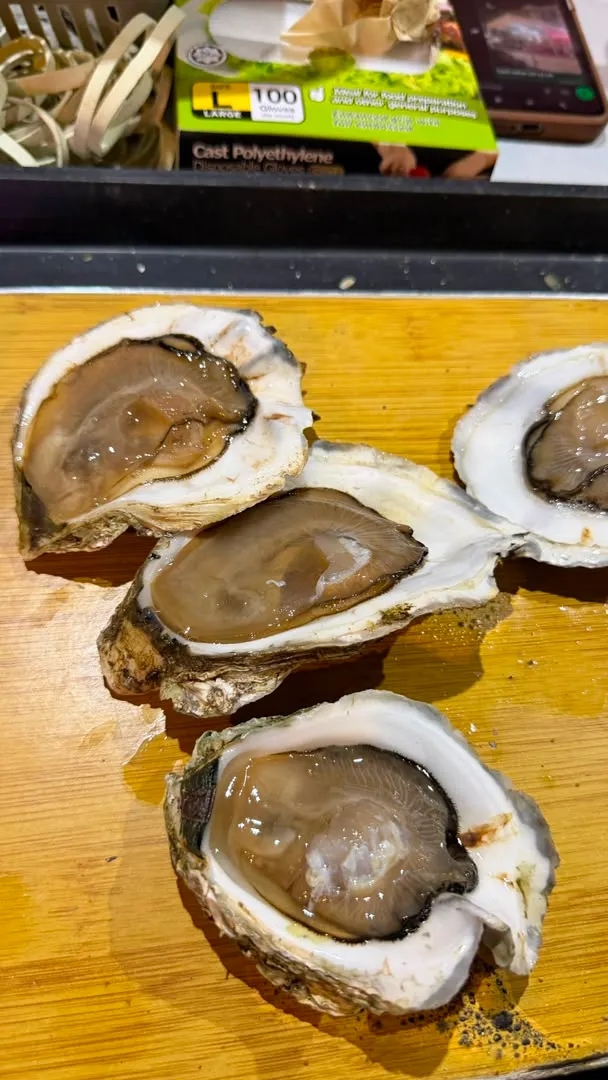
Crassostrea belcheri
The big one. Grown in the warm, plankton-heavy water off Sabah, Belcheri puts on size fast and fills the shell: creamy, sweet and substantial enough to stand up to heat, butter, garlic and fire. If you are grilling, this is the oyster. It also eats very well raw, provided you are hungry.
Telling them apart
People often assume the small one is just a young large one. It is not. These are different animals with different shells, different growth rates and different water, and an Iredalei will never grow into a Belcheri no matter how long you leave it on the line.
| Character | Iredalei Crassostrea iredalei | Belcheri Crassostrea belcheri |
|---|---|---|
| The animal | ||
| Common name | Slipper oyster | White scar oyster, or mangrove oyster |
| Shell | Taller than long, thin, fairly straight margin, slipper shaped | Long, heavy and deeply cupped, often crusted with algae |
| Market size | 2.5 to 3 inch | 4 inch and above |
| Adductor scar | Small and pale | Pale, and it is what the name white scar refers to |
| Meat | Firm and dense, pale, sits deep in the cup | Brown cream, soft and full, fills the shell edge to edge |
| Growth | Slower, which is why it stays small and keeps its density | Fast, which is why it reaches grilling size in a season |
| Water | Sheltered coastal bays | Warm estuarine and mangrove water, 15 to 25 ppt salinity |
| In the kitchen and the trade | ||
| On the plate | Raw on the half shell, a squeeze of lime and nothing else | Grilled, baked, or raw if you are hungry |
| In the trade | The higher value of the two in Malaysia, on taste and appearance | The volume grade, and the one people picture when they picture an oyster |
What the trade sells as Belcheri is more than one species. Magallana belcheri, the white scar oyster, is named for the pale adductor muscle scar inside the shell. Magallana bilineata, the black scar oyster, carries a dark one. They are landed together, sold together and published together, and the standard COI barcode does not reliably separate them, which is why a meaningful share of the sequences in public databases are known to be misidentified.
Our Bambangan stock looks like the black scar type. The rest looks like the white. We have not had either genetically confirmed, so we sell the lot as Belcheri and tell you this rather than claim a precision we do not have. If that distinction matters for your kitchen, ask us and we will show you the shells side by side.
Grading
Every oyster is graded by shell length after depuration. Anything undersized goes back on the line to keep growing rather than into the box. Note the gap: an Iredalei is capped at 3 inch and a Belcheri does not leave us below 4, so nothing we sell sits between the two.
At the table
Store flat, cupped side down, between 2 and 8 °C, covered with a damp cloth. Never in fresh water and never sealed in plastic. They are alive and they need to breathe.
Find the hinge at the pointed end, work the knife in and twist rather than lever. Run the blade along the top shell to release the adductor, then under the meat. A folded tea towel is worth more than a fancy knife.
Tip out the first liquor after shucking and give it thirty seconds to refill from the oyster itself. Cleaner, sweeter, and no shell grit.
An Iredalei wants nothing but a squeeze of lime. A grilled Belcheri wants butter, garlic and a hot fire, and about four minutes. Anything more elaborate is usually hiding something, and there is nothing here to hide.
Beyond oysters
Vertical integration means we produce more than we need. The surplus goes to other Malaysian growers, because a single farm is fragile and an industry is not.
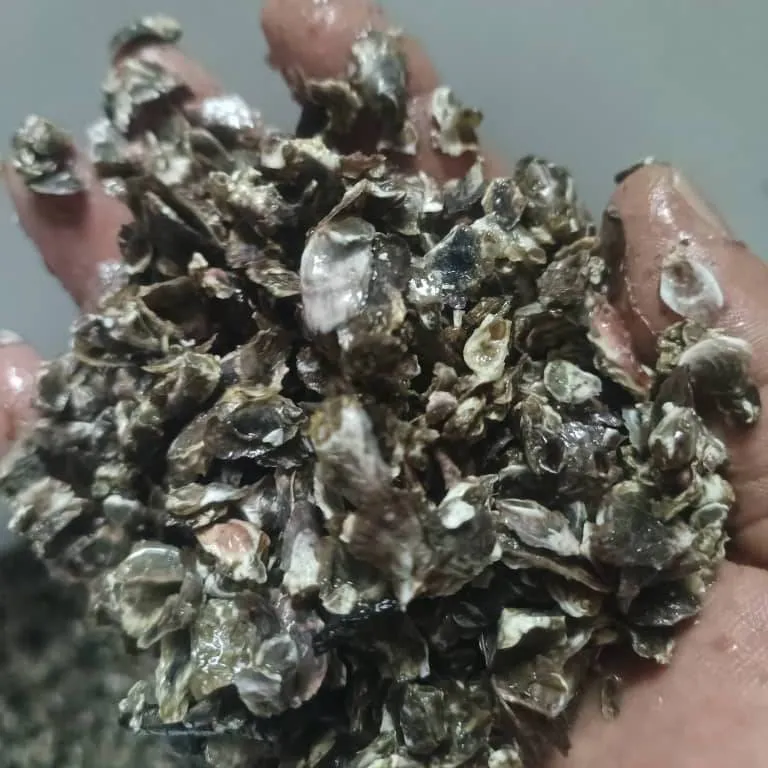
Triploid and diploid seed produced through licensed hatchery partnerships, graded and supplied to growers across Malaysia. Reliable seed is the single biggest constraint on this industry, and we would rather solve it for everyone.
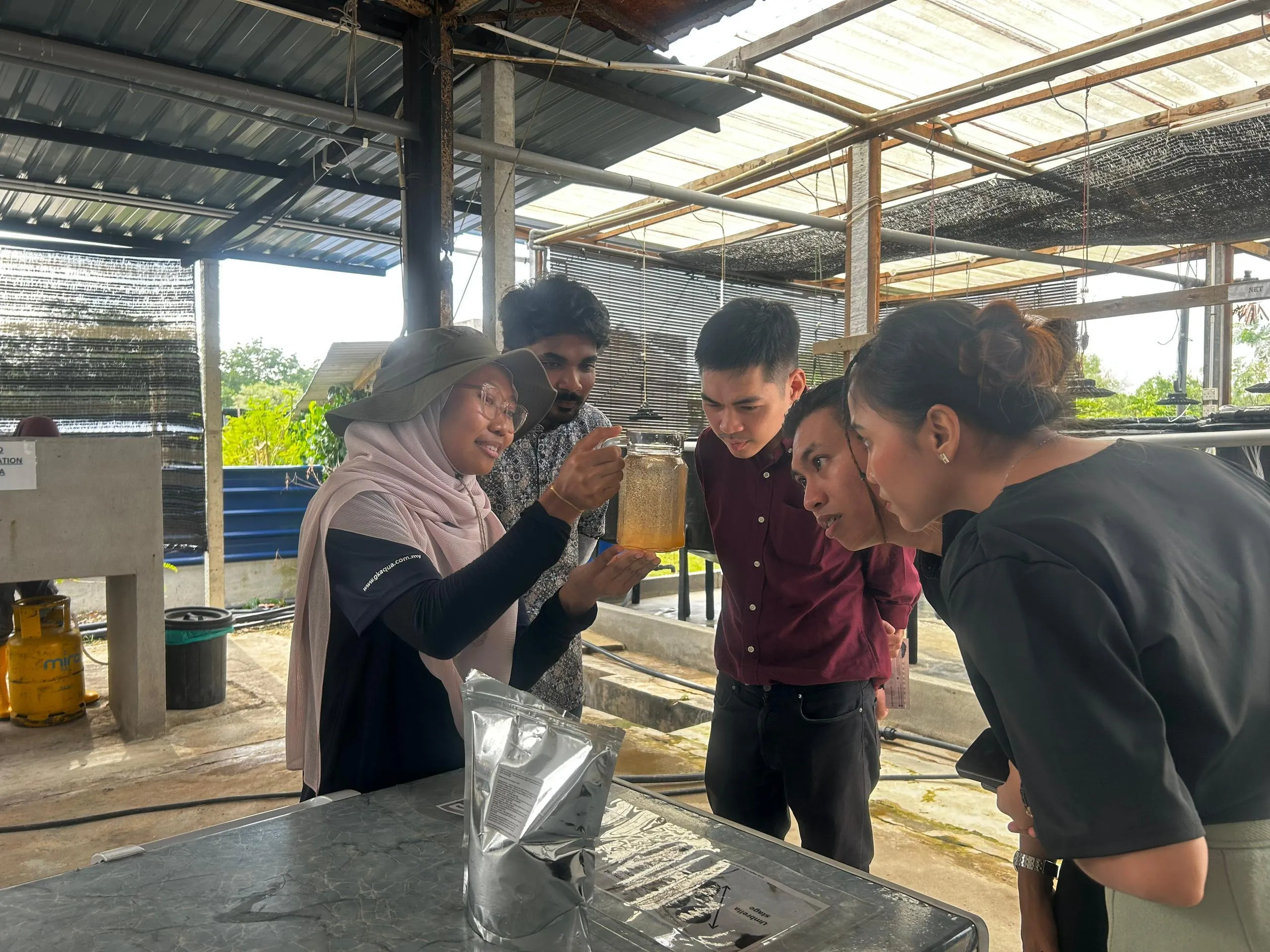
Live algae culture, the feed that larvae and spat depend on. Our partner cultures it at the Tawau hatchery, and we supply it onward to other growers and research programmes.
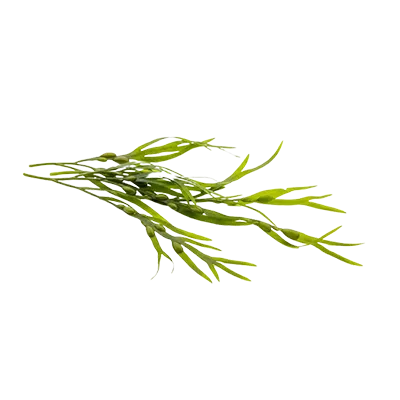
Grown alongside the oyster lines, where it absorbs excess nutrients and improves the water for everything around it. Used in aquafeed and as a crop in its own right.
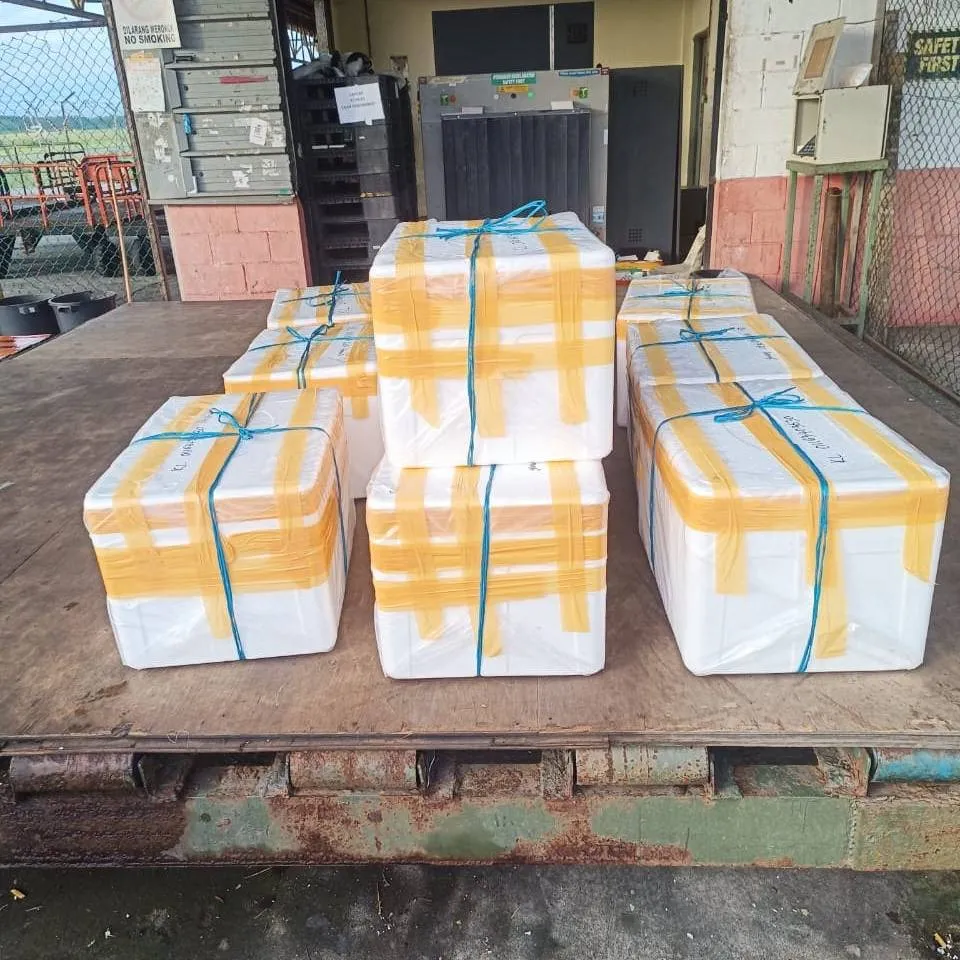
Through partnerships with Malaysian technology providers we supply the rack, raft, basket and monitoring hardware that a new grower needs to start properly rather than improvise.
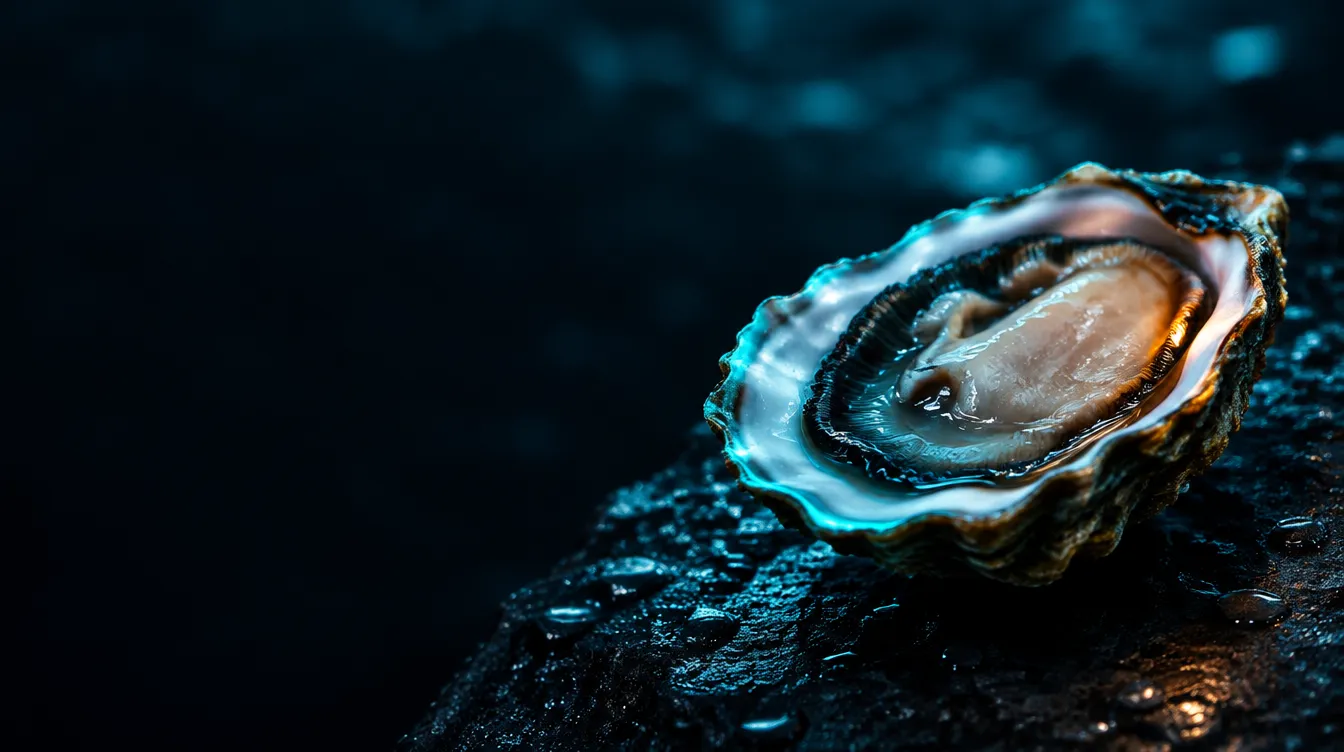
Come and see
Farm visits run daily from 11:00 to 17:00, rafts, hatchery, depuration tanks and chill room, finishing with oysters shucked in front of you.